
Polyolefins
Polyolefins are a class of versatile polymers that are widely used across various end-use industries and are characterized by their simple, repeating hydrocarbon units, which imbue them with a wide range of valuable properties. From packaging and automotive components to medical devices and construction materials, polyolefins play an integral role in our daily lives. In this article, we will explore the fundamental nature of polyolefins, their production methods, and their pivotal role in various applications, while at the same time emphasizing their significant contribution in facilitating the acceleration towards a sustainable future.
Some of the common polyolefins include Polyethylene (PE), which comprises Linear Low Density Polyethylene (LLDPE), Low Density Polyethylene (LDPE), and High Density Polyethylene (HDPE), each with distinct properties and applications; Polypropylene (PP), known for its high melting point and stiffness; and lesser-known polyolefins like Polybutene and Polymethylpentene, each possessing unique properties. These polymers are typically manufactured through addition polymerization processes, utilizing specific catalysts such as Ziegler-Natta (ZN) catalysts, chromium-based catalysts, or single-Site catalysts and initiators. Approximately 75% of polyolefin production employs ZN catalysts, named after Nobel laureates Karl Ziegler and Giulio Natta. They are prepared by treating titanium chlorides with organoaluminum compounds, such as triethylaluminum. In some cases, the catalyst is insoluble and used in the form of a slurry. Polyolefins can be further enhanced by modifying them with fillers, plasticizers, stabilizers, colorants, and flame retardants.
The most widely used polyolefins in commercial applications are PE and PP. LDPE represents a form of polyethylene characterized by a highly branched structure and whose density is lower than HDPE. This structure results from a combination of a high degree of short and long chain branching, making LDPE less crystalline, typically ranging from 30% to 50%, compared to the highly crystalline nature of HDPE, which boasts around 90% crystallinity. In contrast, Linear Low-Density Polyethylene (LLDPE) is produced through ethylene polymerization in conjunction with other olefins possessing longer hydrocarbon chains, such as 1-butene, 1-hexene, or 1-octene. This process creates a linear backbone with a higher degree of short and uniform branches, resulting in a semi-crystalline material with crystallinity ranging from 30% to 60%. Crosslinked polyethylene (PEX) undergoes a transformational crosslinking process that significantly alters its properties. This transformation enhances PEX's resistance to temperature, pressure, and corrosion. However, this shift from a thermoplastic polyethylene to a thermoset form imposes limitations on the mechanical recycling possibilities for this material. PP, on the other hand, originates from the polymerization of propylene, ensuring that each monomer possesses a methyl side group. The presence of asymmetric carbon atoms within the polymer chain leads to stereoisomerism in polypropylene.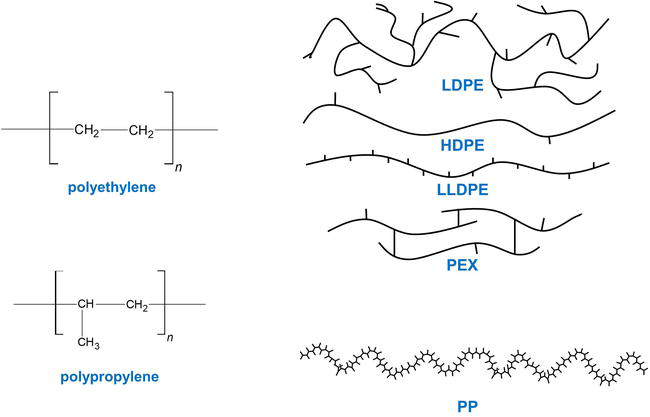
Picture Credits: https://www.intechopen.com/chapters/77881
Polyolefins are highly prized for their exceptional mechanical, thermal, electrical, and chemical properties, rendering them indispensable in industries such as packaging, automotive manufacturing, and construction. Their remarkable mechanical strength and durability make them ideal for applications that require resistance to heavy loads and wear. Additionally, their thermal insulation capabilities, coupled with the ability to withstand a wide temperature range, make them invaluable in energy-efficient construction and automotive engine components. In the electrical sector, polyolefins' good insulation properties ensure reliable electrical integrity, while their resistance to various chemicals is essential for containers and pipelines used to transport corrosive substances. These versatile materials are expertly shaped through processes like extrusion, injection molding, and blow molding, allowing manufacturers to create tailored components and products. Common applications span a wide spectrum, encompassing packaging, where their protective abilities shine, to automotive manufacturing, construction, consumer goods, healthcare, and agriculture, where their safety, durability, and cost-effectiveness make them a top choice for various applications, thereby contributing significantly to the progress and efficiency of multiple industries.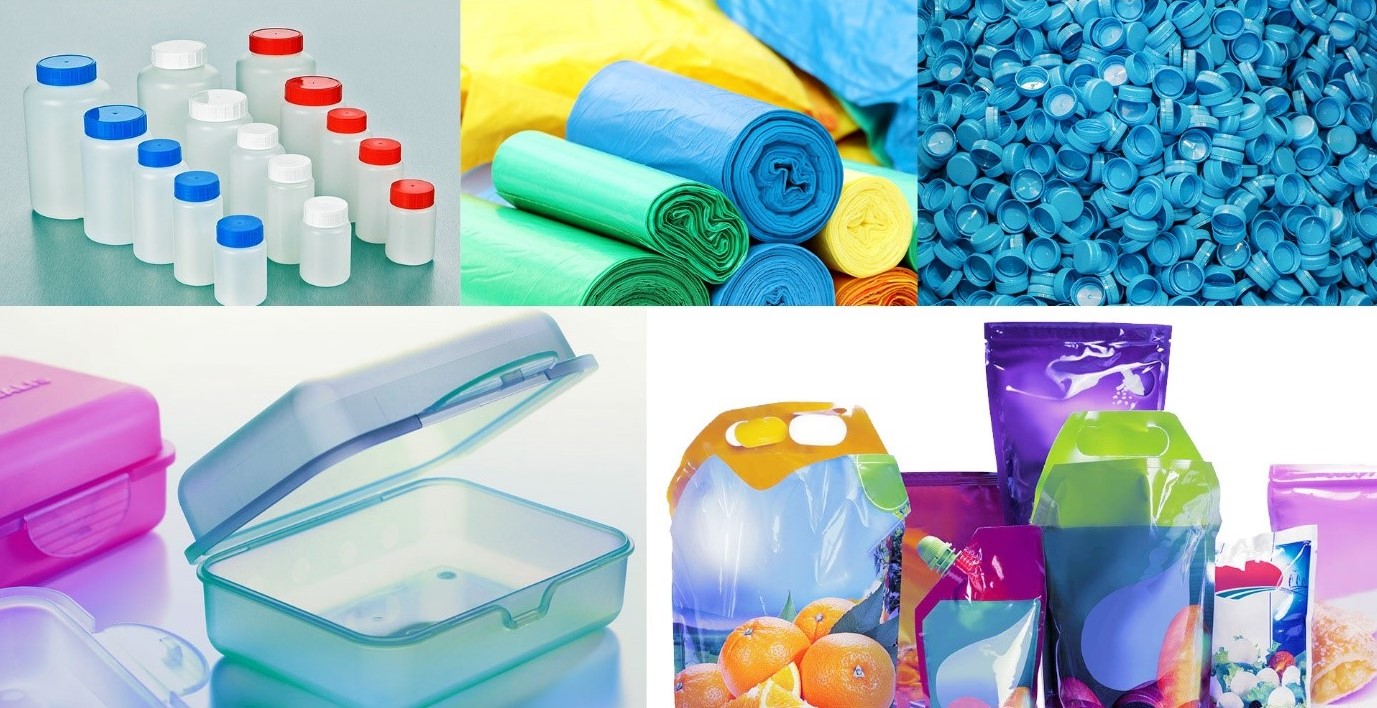
Polyolefin (LDPE, LLDPE, HDPE and PP products)
However, the world is grappling with large scale accumulation of waste matter on account of poor waste management systems. Therefore, recycling polyolefins, such as PE and PP, which constitute the bulk of global plastic usage, is essential for securing a sustainable future. Recycling conserves finite resources, reduces energy consumption, and minimizes plastic waste pollution. Challenges in the recycling process include sorting and contamination issues, managing mixed polymer products, the potential for downcycling, and market volatility. Sustainable practices to address these challenges involve investing in advanced collection and sorting technologies, designing products with recyclability in mind, developing robust recycling infrastructure, educating consumers on responsible plastic use and disposal, fostering innovation in recycling technologies, and establishing stable markets for recycled polyolefins. By addressing these challenges and adopting sustainable practices, we can significantly reduce the environmental impact of polyolefins, promote resource efficiency, and contribute to a greener, eco-friendlier world.
Recent advancements in polyolefins have ushered in a new era of innovation. Nanotechnology has enabled the development of nanocomposite polyolefins with enhanced mechanical, thermal, and barrier properties, opening up possibilities in industries such as packaging, automotive, and aerospace. Biodegradable polyolefins have emerged as eco-conscious alternatives, with formulations that naturally break down, reducing environmental impact. Additionally, high-performance variants with improved strength, heat resistance, and chemical stability are paving the way for applications in demanding environments, such as medical devices and industrial components. These developments underscore the adaptability and versatility of polyolefins, positioning them at the forefront of sustainable and high-performance materials in various sectors. Polyolefins continue to be the backbone of many industries due to their versatility and desirable properties. As technology advances and sustainability becomes a priority, we can anticipate further innovations across the polyolefin value chain.
If you have any other questions or would like to suggest topics for us to write about, please feel free to contact us at prashant.gupta@polymerupdateacademy.com
Author
Dr. Prashant Gupta
Faculty, Polymerupdate Academy

