
The Role of Polymers In Powering The Future via. Lithium-Ion Batteries
In today's world, when technology is impacting diverse spheres of the human life, the power to run our devices efficiently and sustainably assumes crucial importance. Lithium-ion batteries have emerged as the go-to solution for this, powering everything from our smartphones and laptops to electric vehicles and renewable energy systems. What's not known commonly is the indispensable role that polymers play in making these batteries not only functional but also safe and sustainable. In this blog post, we will learn about the fascinating world of lithium-ion batteries and the pivotal role that polymers play within them.
Lithium-ion batteries (LIBs) are rechargeable batteries that store and release electrical energy through reversible chemical reactions. They are widely used in portable electronic devices, electric vehicles, and stationary energy storage systems due to their high energy density, long cycle life, and low self-discharge rate. LIBs consist of four main components: anode, cathode, separator, and electrolyte. During the charge/discharge processes, lithium ions move between the anode and cathode through the electrolyte, generating an electric current that powers the device. Before we dive into the use of polymers, let's start with the basics of lithium-ion batteries. These powerhouses are made up of several key components:
1. Anode: This is the negative electrode where lithium ions are stored when the battery is charged.
2. Cathode: The positive electrode where lithium ions move during discharge.
3. Electrolyte: A conductive solution that allows lithium ions to move between the anode and cathode.
4. Separator: A porous material that keeps the anode and cathode from coming into direct contact, preventing short circuits.
5. Current Collectors: Metal foils that collect the electrical current from the anode and cathode.
6. Cathode Binder: A crucial component that holds the cathode materials together, improving electrode stability.
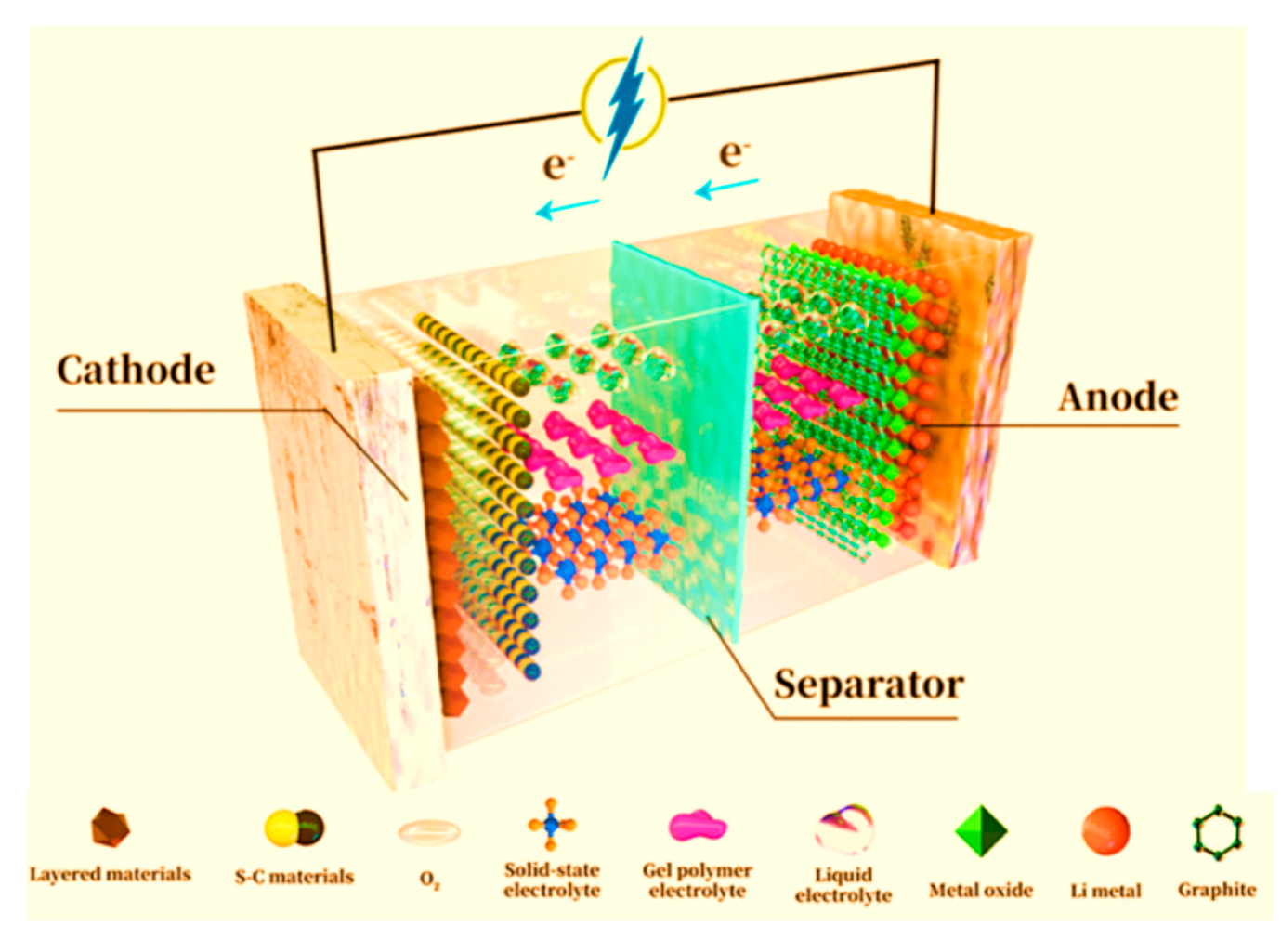
Rechargable Lithium-ion battery (Reference: https://www.mdpi.com/2079-9292/9/7/1161)
Now, let's focus on the vital role of polymers in these battery components:
1. Separator: Polymers are often used to manufacture the separator, a critical safety component in lithium-ion batteries. Separators are designed to prevent short circuits between the anode and cathode, which could lead to thermal runaway and, in extreme cases, explosions. Polymers, with their insulating properties and mechanical strength, are well-suited for this task. They create a physical barrier that allows lithium ions to pass through while preventing direct contact between the electrodes. Here is a list of some polymers and materials commonly used as separators in lithium-ion batteries:
Polyethylene (PE): Commonly used in lithium-ion batteries due to its insulating properties and mechanical stability.
- Polypropylene (PP): A frequently used separator material known for its insulating qualities and compatibility with lithium-ion batteries.
- Polyvinylidene fluoride (PVDF): While PVDF is often used as a binder, it can also serve as a separator material due to its high thermal stability and chemical resistance.
- Polytetrafluoroethylene (PTFE): Known for its non-stick and high-temperature resistance properties, PTFE can be used as a separator in certain applications.
- Poly(acrylonitrile) (PAN): PAN-based separators offer good electrolyte wettability and are used in some lithium-ion battery configurations.
- Poly (methyl methacrylate) (PMMA): PMMA separators are known for their chemical resistance and can be employed in specific battery designs.
- Polysulfides (PS): Polysulfide-based materials are used as separators in certain lithium-sulfur (Li-S) battery configurations.
- Cellulose Materials: Some cellulose-based materials may be used as separators, offering advantages in terms of wettability and processing ease.
- Nano-Sb2O3 Modified Materials: Nano-Sb2O3-modified materials can be used to enhance separator performance, particularly in terms of thermal stability and safety in Li-ion batteries.
2. Electrolyte: While the most common electrolytes in lithium-ion batteries are liquid, polymer electrolytes have gained attention in recent years. These solid-state electrolytes offer several advantages, including enhanced safety and potential for higher energy density. Polymer electrolytes are less prone to leakage and combustion compared to their liquid counterparts, making them a promising solution for safer batteries.
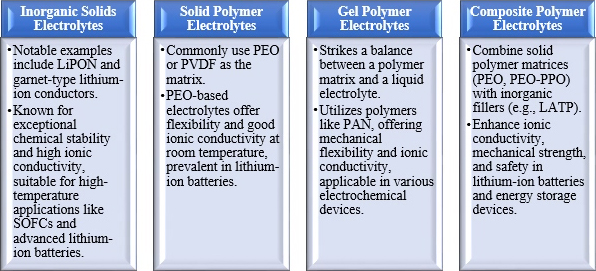
Polymeric Electrolytes in lithium-ion battery
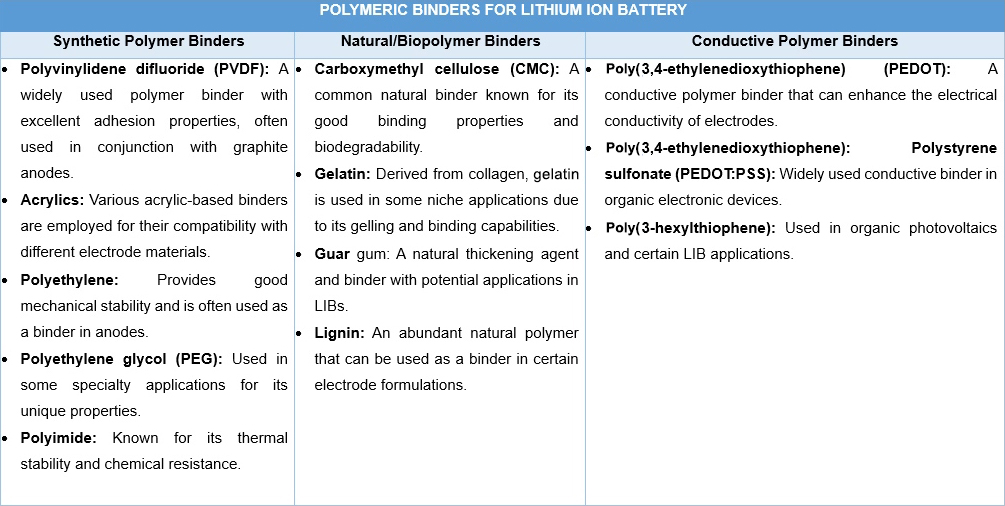
3. Cathode Binders: Polymers are used as binders in the cathode, holding together the cathode materials and ensuring good electrical contact. This improves the stability and longevity of the cathode, ultimately extending the battery's lifespan. Polymers also enhance the cathode's mechanical integrity, crucial for maintaining performance under various conditions. Some of the polymers used for cathode binders are given as a table here.
4. Battery Module Cell Frames/Retainers/Battery Pack Top Covers
Polymers in such applications provides thermal management, electrical insulation, and chemical resistance. Their lightweight design contributes to energy efficiency, while impact resistance safeguards internal components. Customizable and cost-effective, polymers enhance manufacturability and dimensional stability, ensuring the safety and performance of battery systems in various applications, including electric vehicles and portable electronics.
- Polyphenylene Ether (PPE): PPE, often used in combination with glass fibers, provides good electrical properties, hydrolytic stability, dimensional stability, low specific gravity, chemical resistance to acids, impact resistance, and flow characteristics. The properties of PPE can vary, based on the number of aromatic rings, their substitution pattern, and whether it is an ether or a thioether.
- High Impact Polystyrene (HIPS): HIPS is known for its impact resistance, stiffness, and ease of processing. It is commonly used to enhance the mechanical properties of polymer compounds in battery module components.
- Acrylonitrile Butadiene Styrene (ABS): ABS is an amorphous terpolymer composed of styrene, acrylonitrile, and butadiene. It offers a balance of strength, thermal resistance, chemical resistance, impact resistance, and surface hardness. ABS is often chosen for its versatility and suitability for various manufacturing methods.
While lithium-ion batteries have revolutionized the way we power our devices, they do come with some inherent challenges and safety concerns such as dendrite growth and thermal management among others. Over time, lithium ions can form dendrites on the anode surface, potentially leading to short circuits. Polymer separators and solid-state electrolytes are being developed to mitigate this issue. Also, the heat generated during charging and discharging can pose safety risks. Advanced polymers with improved thermal stability are being integrated into batteries to manage heat more effectively. Also, the economic situation around the cost of lithium is a concern for the technology to grow as well. Lithium prices witnessed a decline leading up to the COVID-19 pandemic in 2019 due to an oversupply of lithium compounds and uncertainties regarding the electric vehicle market. During the pandemic in 2020, prices initially dipped due to supply chain disruptions and reduced manufacturing, but they later stabilized as governments continued to promote green energy initiatives. In the post-COVID era, from 2021 onwards, lithium prices rebounded significantly, driven by surging demand for electric vehicles and renewable energy storage solutions. Also, LIBs pose significant environmental challenges, including the depletion of natural resources, pollution, and hazardous waste disposal. Therefore, the development of sustainable and efficient recycling strategies for LIBs is crucial to mitigate their environmental impact and ensure a circular economy for battery materials. As countries embraced ambitious plans for electrification, concerns about supply chain constraints and environmental challenges in lithium mining projects contributed to rising lithium prices, reflecting the pivotal role of lithium in the transition to cleaner energy sources.
Lithium-ion batteries are the backbone of modern technology, and polymers are the unsung heroes within these powerhouses. From separators to electrolytes and cathode binders, polymers contribute significantly to battery safety and performance Ongoing research and development in polymer technology are driving advancements that will shape the future of energy storage, from electric vehicles to renewable energy systems. As we continue to rely on lithium-ion batteries to power our lives, it's clear that polymers form a crucial part of this electrifying journey into the future.
If you have any other questions or would like to suggest topics for us to write about, please feel free to contact us at prashant.gupta@polymerupdateacademy.com
Author
Dr. Prashant Gupta
Faculty, Polymerupdate Academy

