
Deformulation: A key to understanding polymers
Deformulation refers to the process of reverse engineering a formulated product or compounded material, often involving complex mixtures of ingredients. The primary objective of deformulation is to analyze and identify the individual components or ingredients present in the compounding recipe. This is achieved by employing various analytical techniques and methodologies to break down the final product and determine the composition, proportions, and nature of each constituent. 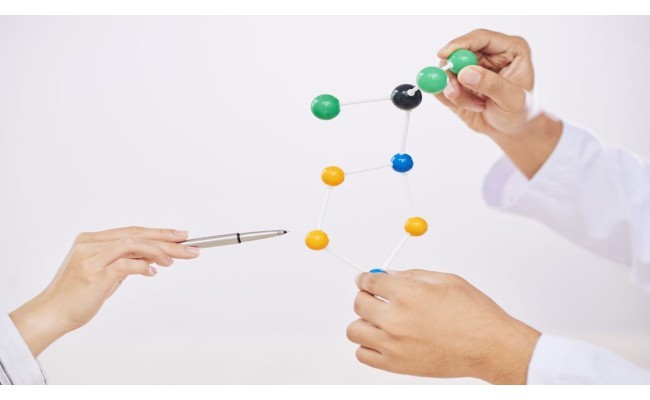
It serves multiple essential purposes for the polymer industry. One of its primary applications lies in quality control, where manufacturers rely on the deformulation methodology to ensure the consistency and high quality of their polymer products. By analyzing the precise composition of polymer compounds, companies can ensure alignment with intended formulations, meet stringent industry standards and attain the desired performance criteria. Additionally, it plays a pivotal role in competitor analysis, granting valuable insights into competitor polymer formulations.
Armed with this knowledge, companies can develop products that match or even surpass the performance of their competitors, bolstering their position in the competitive polymer market. It also serves as a powerful troubleshooting tool. When issues arise with the performance or stability of a polymer product, a technical know-how about the product recipe enables scientists and engineers to identify the underlying causes by pinpointing any deviations in the compound's composition.
This comprehensive analysis aids in resolving problems and refining the manufacturing process to enhance the overall quality and reliability of polymer materials. It supports reverse engineering efforts, allowing researchers to comprehend the individual components and proportions that constitute specific polymer compounds. This knowledge can lead to the development of innovative materials or the optimization of existing ones, further advancing polymer science and technology.
Moreover, polymer scientists can use this analytical approach to better understand the roles and contributions of each ingredient, such as additives, fillers, or processing aids, in shaping the properties of the final products. Armed with such insights, researchers can tailor formulations to achieve specific performance goals, improving the overall efficiency and effectiveness of polymer materials. It can also help in safeguarding intellectual property rights. By detecting potential infringements on patented polymer formulations, companies can protect their proprietary compounds and take necessary legal measures to uphold their rights in the competitive polymer landscape.
To perform a successful deformulation, a combination of analytical techniques like spectroscopy, chromatography, microscopy, and thermal analysis may be employed. These methods help identify and quantify the different components within the compounding recipe, providing valuable information about the product's composition and aiding in further research, development, or product improvement. A brief account of some of these techniques is presented here:
- Fourier Transform Infrared Spectroscopy (FTIR): FTIR is a non-destructive analytical technique utilized for investigating the molecular composition of materials based on their infrared absorption characteristics. FTIR is employed to identify specific functional groups present in the polymer matrix and any additional additives, such as plasticizers, stabilizers, fillers, or pigments.
- Gas Chromatography with Mass Spectral detection (GC/MS): GC/MS is a high-resolution analytical method used to separate and identify volatile or semi-volatile organic compounds in complex mixtures. It aids in detecting and quantifying low molecular weight components, including residual solvents, monomers, and volatile additives, thus offering insights into the chemical composition of the polymer.
- Liquid Chromatography with Mass Spectral detection (LC/MS): LC/MS is a hyphenated analytical technique that combines liquid chromatography separation with mass spectrometry detection. LC/MS is instrumental in profiling non-volatile and semi-volatile additives, such as plasticizers and antioxidants, allowing for their identification and quantification.
- Differential Scanning Calorimetry (DSC): DSC is a thermal analysis method used to investigate the thermal properties of materials. It enables the determination of key parameters such as the glass transition temperature (Tg) and melting temperature (Tm). The Tg characterizes the transition between the glassy and rubbery states of the polymer, while the Tm indicates the temperature at which the polymer undergoes melting, providing critical insights into the material's stability and processing behavior.
The future of plastic deformulation and associated analytical methods holds significant promise as advancements in technology and growing concerns for sustainability drive it forward. With ongoing research and development, analytical techniques are expected to improve, and become more sensitive, accurate, and efficient. This progress will enable researchers to identify trace amounts of additives and impurities in plastic compounds, leading to a more comprehensive and detailed deformulation analysis. Additionally, the rising prominence of nanotechnology in plastics necessitates adaptations to deformulation methods to effectively analyze and characterize complex nanostructured materials.
The integration of machine learning and artificial intelligence will enhance data processing and pattern recognition, streamline the deformulation process and provide deeper insights into complex polymer systems. Moreover, as the emphasis on sustainable practices grows, deformulation will play a crucial role in analyzing eco-friendly and bio-based plastics, identifying renewable raw materials, and optimizing environmentally friendly polymer formulations to reduce the overall environmental impact of plastics. Multimodal analysis, combining various analytical techniques, will become more prevalent, providing a holistic understanding of polymer structures and interactions. Molecular simulation techniques will complement experimental deformulation efforts, aiding in predicting material properties and optimizing formulations through virtual experimentation.
The development of non-destructive deformulation methods will become increasingly valuable for analyzing valuable or irreplaceable plastic artifacts without compromising their structural integrity. These methods will allow researchers to gain insights without damaging or altering historical or unique plastic objects. Furthermore, with evolving regulations and standards addressing plastic waste and environmental pollution, deformulation will become essential for verifying compliance with sustainability requirements and ensuring the absence of harmful substances in plastics.
The future of plastic deformulation and related analytical methods will be shaped by ongoing technological advancements, increasing emphasis on sustainability, and the need to tackle complex challenges in the polymer industry, paving the way for more informed and responsible use of plastics in the years to come.
If you have any other questions or would like to suggest topics for us to write about, please feel free to contact us at prashant.gupta@polymerupdateacademy.com
Author
Dr. Prashant Gupta
Faculty, Polymerupdate Academy

