
From Waste to Resource: AI's Role in Modern Polymer Recycling
The increasing global concern for environmental sustainability has necessitated the development and implementation of efficient recycling technologies in various industries. The polymer industry which has been no exception to this changing trend faces significant challenges in managing plastic waste. In recent years, Artificial Intelligence (AI) has emerged as a powerful tool to revolutionize the polymer recycling process. This blog aims to explore the role of AI in modern-day polymer recycling and shed light on its potential benefits which have been identified as follows:-
-
Sorting and Identification: One of the key challenges in polymer recycling is the accurate sorting and identification of different types of plastics. Traditional recycling methods often rely on manual sorting, which is labour-intensive and prone to errors. AI-based technologies, such as machine vision and image recognition, offer a viable solution. These systems employ sophisticated algorithms to analyze images and identify specific polymer types accurately and efficiently. By automating the sorting process, AI significantly reduces human error and enhances the overall efficiency of recycling operations.
-
Quality Control and Contamination Detection: Maintaining the quality of recycled polymers is crucial for their successful reuse. AI plays a vital role in quality control by identifying and segregating contaminated or degraded materials. Through machine learning algorithms, AI systems can be trained to recognize various forms of contamination, such as color variations, foreign objects, or chemical impurities. By ensuring high-quality recycled polymers, AI contributes to the development of sustainable and reliable polymer products.
-
Predictive Maintenance: Polymer recycling facilities often rely on complex machinery and equipment to process plastic waste. Unplanned breakdowns and maintenance downtime can disrupt the recycling process, leading to productivity losses. AI-powered predictive maintenance systems can help mitigate these issues. By analyzing real-time data from sensors and equipment, AI algorithms can predict potential failures or malfunctions. Early detection of such issues allows for timely maintenance and reduces the risk of unexpected downtime, ensuring optimal productivity and efficiency.
-
Process Optimization: Process optimization in polymer recycling using AI involves leveraging machine learning and data analytics techniques to improve various aspects of the recycling process. AI algorithms can analyze large volumes of data from different stages, such as sorting, cleaning, and processing, to identify inefficiencies, bottlenecks, and opportunities for improvement. By analyzing historical data, AI can identify patterns and correlations to optimize parameters, such as temperature, pressure, and chemical compositions, for better recycling outcomes. AI can also assist in predicting and preventing equipment failures, optimizing energy consumption, and automating decision-making processes, leading to increased efficiency, reduced costs, and improved overall sustainability in polymer recycling.

Apart from these, some other areas where AI can help in terms of enhancing the efficacies of polymer recycling process include material composition analysis which involves accurate knowledge of the chemical composition of recycled polymers for their effective utilization in manufacturing processes, predictive maintenance, market analysis and demand forecasting, etc. However, the major focus area remains development of new age systems that are capable of running at breakthrough output and are focused on automation ensuring high accuracy and proficiency of the system developed.

Image Credits: Tesla Inc.
A simpler example to understand the use of AI in sorting and identification can be Tesla’s identification/detection system which is a big part of its auto-drive feature. It uses a mix of computer vision using cameras, machine learning to improve object detection via deep neural networks, sensor fusion and real time decision making for the adjustment of speed, steering, and/or braking to manoeuvre the vehicle. Similarly, machine vision and image recognition algorithms are used for sorting and identification in plastic recycling. The process begins with capturing images or videos of plastic objects using cameras or sensors. These images are then pre-processed to enhance their quality, which may involve resizing, noise removal, contrast adjustment, and normalization. Next, relevant features are extracted from the pre-processed images, such as color histograms, texture descriptors, shape descriptors, and edge-based features. To train the image recognition model, a large dataset of labeled plastic images is collected, covering various plastic variations. Machine learning algorithms, such as convolutional neural networks, are commonly used for training the model. During this stage, the model optimizes its parameters by adjusting them to minimize the difference between predicted and actual class labels. Once the model is trained, it can be used for plastic classification. When a new image is presented, the model processes it through its layers, extracting features and making predictions about the plastic type. The output can be a class label indicating the type of plastic or a probability distribution over the different classes. The classification results are then used to guide sorting systems in recycling facilities. These systems employ mechanical mechanisms, such as robotic arms or conveyor belts, to sort the plastic objects based on their identified type. The information from the image recognition system helps direct the sorting process efficiently, ensuring that plastics are correctly categorized for further recycling.
Continuous improvement is an essential aspect of this process. Feedback on misclassified items is collected to refine the system. This can involve retraining the model with additional data, fine-tuning its parameters, or using more advanced algorithms. By continuously improving the system, its accuracy and performance are enhanced over time. It's important to note that the specific algorithms and techniques employed may vary depending on the requirements and complexity of the recycling facility. Some advanced systems may incorporate 3D imaging, hyperspectral imaging, or combination algorithms for increased accuracy and flexibility. Overall, the integration of machine vision and image recognition algorithms in plastic recycling enables automated sorting and identification, streamlining the recycling process and contributing to a more sustainable future.
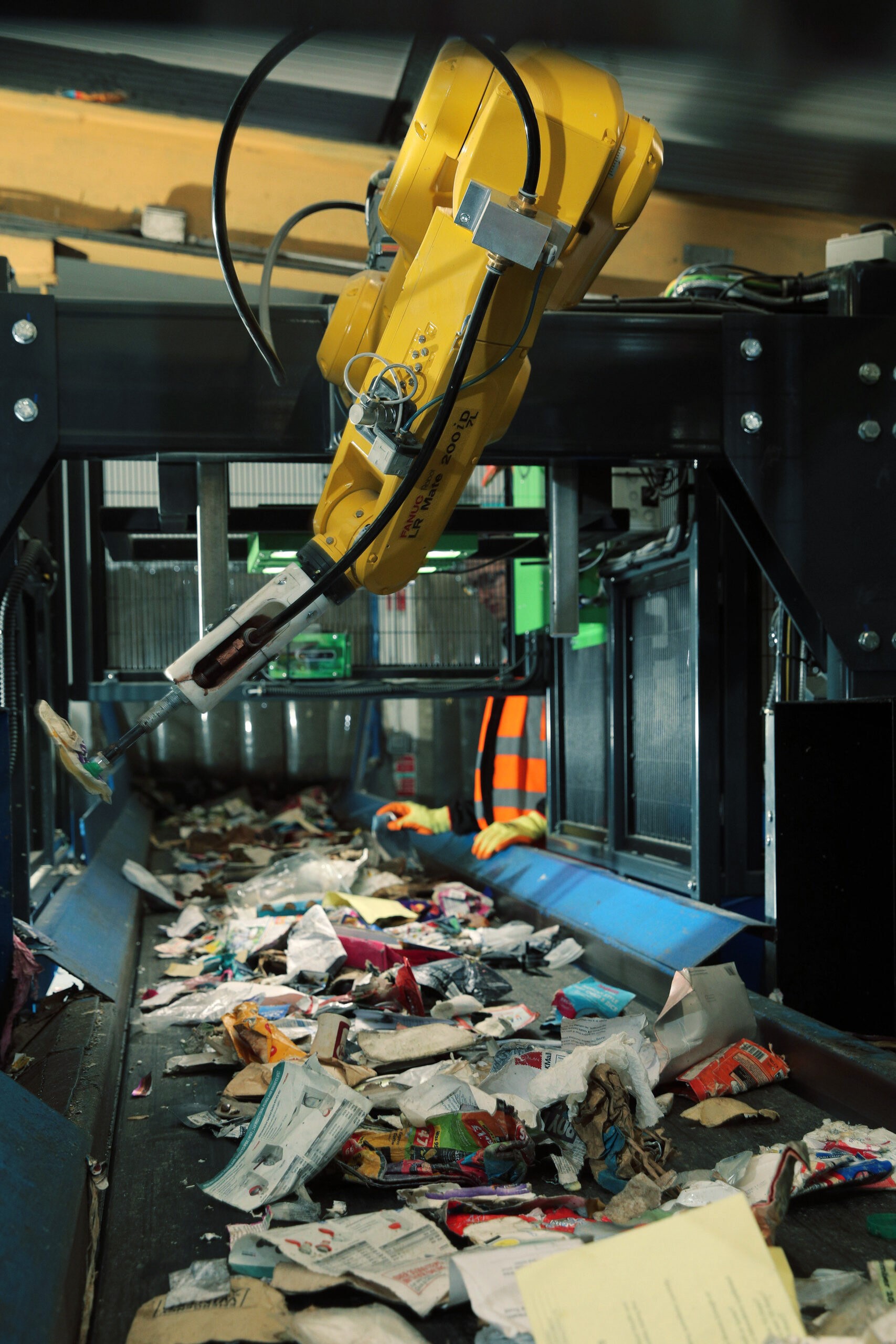
Artificial Intelligence is revolutionizing the polymer recycling industry by offering innovative solutions to long-standing challenges. From accurate sorting and identification to predictive maintenance and market analysis, AI systems are transforming the way plastic waste is managed and recycled. The adoption of AI technologies in polymer recycling not only improves operational efficiency but also promotes sustainable practices and reduces environmental impact. As AI continues to advance, its role in the polymer industry will likely expand further, leading to more efficient and environmentally responsible recycling processes. In embracing AI, the polymer industry can unlock new opportunities for a circular economy and contribute significantly to a greener planet.
If you have any other questions or would like to suggest topics for us to write about, please feel free to contact us at prashant.gupta@polymerupdateacademy.com
Author
Dr. Prashant Gupta
Faculty, Polymerupdate Academy

